

“Online education is here to stay and evolve even further”
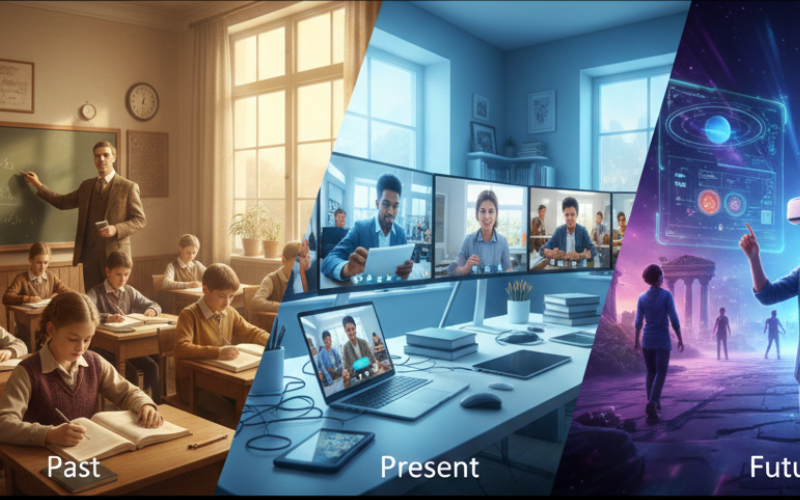
As a college professor in the United States, I was very fortunate to witness the evolution of online education. The university I worked for was a pioneer in “Distance Learning” as it was then called, where the university reached out to potential students who for whatever reason could not attend the university. I participated in that process. I designed courses for students who accessed their course materials through mail correspondence or just made a sole trip to the university to collect learning materials they had to study on their own, and take an exam when they were ready for credentialling. Over time, the mail correspondence was replaced with a digital marvel called the “Learning Management System (LMS)” where the entire course (study materials, quizzes, and exams) is uploaded in a course shell, which the students can access, study the material, take quizzes and exams, submit other writing assignments, and participate in thoughtful discussions assigned by the instructor, using the feature called “Discussion Board”.
As a faculty member and later as a Dean, I witnessed serious opposition to online courses, where the argument was real learning cannot take place unless the students and the instructors directly communicate with each other in a classroom setting, where the classroom was instrumental in creating a community of learners. Online education just failed, according to these skeptics, to create such a community of learners. University leadership however, was determined to press ahead with online education. The revenue implication of reaching students who could be reached with traditional university offerings were just too enormous to ignore. In addition, they understood and appreciated a paradigm shift that in educational offerings, and they simply wanted to be ahead of the curve.
Online education is here to stay and evolve even further. The introduction of AI, and the integration of various technology tools, namely the use of multimedia elements, virtual simulations, augmented reality, and interactive learning, enhanced the learning experience of online students. MOOCs (massively open online courses) are now the order of the day, where students from all over the world are enrolling in classes offered by universities and technology has been able to create that community of learners which is impossible to do in a classroom environment. These developments have made the resistance to online education a thing of the past. Online education offers students flexibility and convenience, where they can learn at their own pace and at the convenience of the home settings. In addition, it allows working professionals to access education which they could not if they had to attend classes in universities. Most importantly, online education breaks geographical barriers, allowing students to take courses in their chosen universities without the costly physical re-location. Online education is here to stay. No ifs or buts about it. The real question is how to learning experiences in an online setting better. How effectively technology can stimulate the personal touches students often experiences in a classroom setting? Better learning experiences, greater access to affordable education makes online education a winner.